
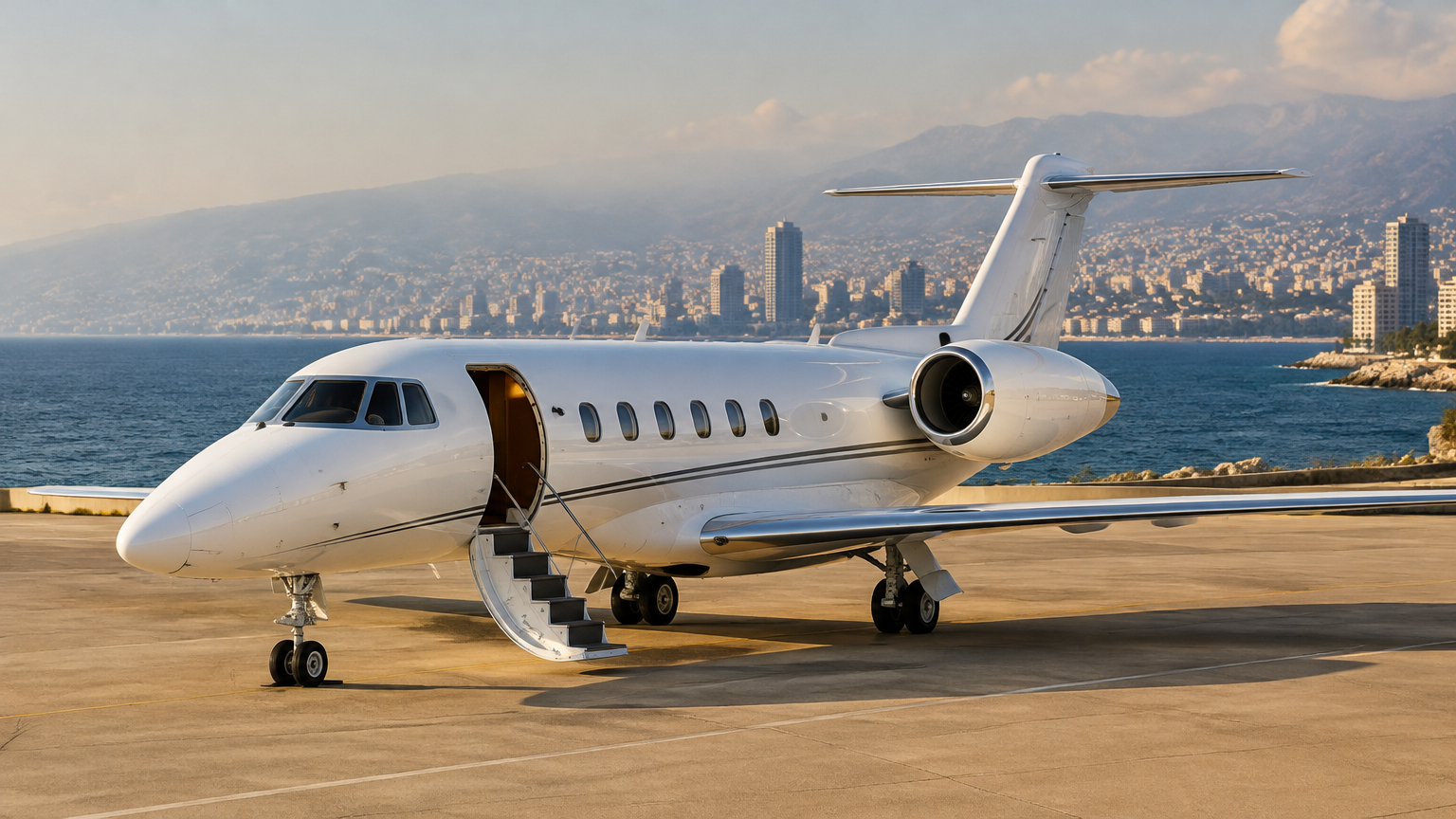
Private Jet Charter Beirut
Private jet charter Beirut: the Mediterranean's most resilient city
Beirut has always been a city that people fly to with purpose. It is the meeting point of the Lebanese diaspora — one of the largest and most globally spread communities in the world — and a commercial capital whose business, banking, design and hospitality sectors operate on relationships maintained in person. Every summer, and again at the holidays, the city fills with returning families, board meetings, weddings and a social calendar that runs from the marina to the mountain. Private aviation is how a great deal of that travel happens, and it is a market MEGA knows well.
A private jet charter Beirut itinerary with MEGA is arranged end to end: the aircraft from a licensed operator, the handling at Beirut–Rafic Hariri International Airport, the timing around your schedule, and the car waiting at the aircraft steps. The journey is planned around your appointment — not the other way round — and a single desk owns the whole itinerary from enquiry to wheels-down.
Beirut–Rafic Hariri International Airport (BEY)
Beirut–Rafic Hariri International Airport (BEY/OLBA) is the country's primary international gateway and the airport for virtually all private aviation into Lebanon. It sits on the coast just south of the city, and in normal traffic the drive to central Beirut, Solidere or the northern suburbs is short. Business-aviation handling is available at the airport, and arriving passengers are met planeside and driven directly onward — no terminal queues, no connections, no lost time.
Because BEY is also the country's main commercial airport, capacity for visiting aircraft — parking, handling windows and crew arrangements — is managed actively, especially across the summer peak. These details are confirmed for each specific trip and date rather than assumed, and the desk will always tell you plainly what a given window can support. For travellers combining Beirut with other regional stops, the same planning applies across the whole itinerary.
Who flies to Beirut — and when
The Beirut charter market has a rhythm all its own. From June through September, the diaspora returns in force: families from the Gulf, Europe, Africa and the Americas coming home for the summer, alongside a full calendar of weddings, festivals and long weekends on the coast and in the mountains. The Christmas and New Year period brings a second, compressed peak. Between those seasons, the traffic is steadier and more corporate — regional headquarters business, banking, real estate, medical travel and the creative industries the city is known for. Many of those itineraries pair Beirut with Riyadh or Istanbul in the same week.
Each of these trips plans differently. A family arriving for six weeks of summer travels with serious luggage and often with staff; a board delegation is in and out within a day; a wedding party may need several aircraft coordinated across the same weekend. The desk plans each on its own terms — aircraft size, catering, ground transport and timing built around the actual party rather than a template.
Choosing the aircraft
For flights within the region — the Gulf capitals, Cyprus, Egypt, Türkiye, Jordan — light and midsize jets are usually the efficient choice, with cabins that seat four to eight in comfort. For nonstop flights to Western Europe, or for larger family and corporate parties, super-midsize and large-cabin aircraft offer the range and the baggage capacity the trip actually needs. MEGA arranges aircraft through licensed partner operators and recommends the category against the real requirements — route, passengers, luggage and season — rather than upselling size for its own sake.
The Beirut summer, planned properly
It is worth being direct about the peak: the summer weeks are when aircraft availability, airport parking and the city's best hotels and drivers are all at their scarcest at the same time. Trips in this window are entirely workable — they simply reward early, decisive planning. The enquiries that secure the best outcomes arrive with dates and passenger lists settled, so the aircraft, handling and ground plan can all be confirmed while options still exist. A last-minute July trip is not impossible, but it is a different exercise with narrower choices, and the desk will always say honestly which situation a given enquiry is in.
Regional routings, planned for the actual date
Beirut's position on the Eastern Mediterranean makes it a natural hub for regional itineraries: a morning departure to the Gulf, an afternoon return; a long weekend split between the city and the mountains; a multi-stop trip across several capitals. Routings and overflight requirements in the region can and do change, so every itinerary is planned and confirmed for the actual date of travel. What does not change is the structure of the service: one desk, one itinerary, one point of accountability.
Departures as carefully as arrivals
Beirut trips are judged on the departure as much as the arrival — the wedding that runs late, the meeting that moves, the family that decides to stay one more weekend. A charter planned properly assumes the schedule will breathe. Crew duty limits, handling arrangements and the car's timing are all confirmed with margins that reflect how Beirut days actually end, and when the plan moves, one call moves all of it — aircraft, handling and ground transport together.
For travellers who fly the route regularly — and Beirut has many who do, summer after summer — the desk keeps preferences on file, and for one-way sectors it is always worth asking what is positioning anyway on the empty legs board, so each trip starts from the last one rather than from a blank form. Send the dates, the passenger count and the routing, and the desk returns operator options with the airport plan and the ground arrangements already thought through.
Whether the trip is a single board day or a full summer in the city, the principle is the same: the itinerary is built from the appointment outward, and every element — aircraft, handling, car — is confirmed for the actual date rather than assumed from a listing. That is the practical difference between a managed trip and a booking: the itinerary is owned by a desk that answers at midnight, not split across suppliers who each know only their own piece.
Frequently asked questions
The questions below cover the practical points most Beirut enquiries raise.
Which airport serves private jet charter to Beirut?
Beirut–Rafic Hariri International Airport (BEY/OLBA) is the city's airport and the gateway for virtually all private aviation into Lebanon. It has dedicated business-aviation handling, and the drive to central Beirut is short in normal traffic. Because it is the country's primary international airport, parking and handling capacity for visiting aircraft is confirmed per trip — particularly across the summer peak and holiday periods.
When is the busiest season for private jet travel to Beirut?
Summer — roughly June through September — is the peak, when the Lebanese diaspora returns in large numbers and the city's events calendar is fullest. The Christmas and New Year period is a second, shorter peak. In these windows, aircraft parking and handling slots are at their tightest, so trips are best confirmed well in advance; the desk will say honestly what a given date can support.
Can I fly from Beirut to the Gulf or Europe by private jet?
Yes. Beirut sits within easy range of the Gulf capitals, Cyprus, Egypt, Türkiye and Southeast Europe, and midsize and larger aircraft reach Western European capitals comfortably. Routings and overflight requirements in the region can change, so every itinerary is planned and confirmed for the actual date of travel rather than assumed from a previous trip.
How much does it cost to charter a private jet to Beirut?
Pricing depends on the aircraft category, the routing, the dates and how the aircraft is positioned — a one-way flight prices differently from a round trip, and peak-season demand affects availability. MEGA provides a tailored quotation for each trip; share the dates, passenger count and routing and the desk returns operator options to compare.
What size of jet do I need for Beirut?
For flights within the Eastern Mediterranean and to the Gulf, light and midsize jets are usually the efficient choice. For nonstop flights to Western Europe or for larger parties, a super-midsize or large-cabin aircraft is the more comfortable option. The right aircraft is confirmed against the route, the passenger count, the luggage and the season — not picked from a generic list.
Can MEGA arrange ground transport and onward travel in Lebanon?
Yes. Chauffeured cars from the airport to the city, the mountain resorts or the coast are arranged as part of the itinerary, and onward connections — by air or road — are planned with the flight. Where travellers combine Beirut with other regional stops, the whole sequence is managed as one trip rather than separate bookings.