Private Jet from Riyadh to Dubai: Flight Time, Aircraft and Cost
TL;DR
- Riyadh to Dubai is a short regional sector; flight time is typically under two hours, depending on routing and winds.
- Light, midsize and super-midsize jets all suit the route; the right choice depends on passengers, luggage and onward plans.
- In Riyadh, flights use King Khalid International (RUH); in Dubai, usually Al Maktoum (DWC) or Dubai International (DXB).
- Same-day returns are common and can be cost-efficient if they stay within crew duty limits.
- Price depends on aircraft, positioning, airport handling and timing — ask for a written quote.
The Riyadh–Dubai corridor is one of the busiest business routes in the Gulf. Executives fly it for meetings, investors for deal days, families for weekends and events. On a private jet the journey becomes predictable: you choose the departure time, clear formalities at a private terminal and spend the flight working or resting. This guide covers what to expect.
Flight time
The great-circle distance between Riyadh and Dubai is roughly 870 km. Airborne time on a business jet is typically in the region of an hour and a half, but actual time varies with the aircraft's cruise speed, the wind and the routing assigned by air traffic control. Regional airspace restrictions can require longer routings at times, and operators plan on the current situation. Your quote will show an estimated block time for each sector.
Door-to-door is where private aviation saves the most time. Private terminals usually mean short walking distances, quick security and immigration processing, and cars that can meet you close to the aircraft, subject to airport rules.
Which aircraft suit the route
Because the sector is short, almost any jet category can fly it. The question is comfort and practicality.
- Light jets suit small groups with modest luggage and are often the most economical option for a quick trip.
- Midsize and super-midsize jets offer a stand-up or near stand-up cabin, more luggage space and a better working environment — popular for business delegations.
- Heavy jets make sense when the aircraft continues on a longer mission (for example, Dubai onward to London), or when a larger group wants space and a full galley.
- VIP airliners are used for large delegations; see our guide to chartering a BBJ or ACJ.
Browse the categories in our fleet guide. We will recommend the smallest aircraft that genuinely fits your group and luggage.
Airports at both ends
Riyadh: private flights generally use King Khalid International Airport (RUH), which has dedicated business aviation handling. Our Riyadh private jet page and the guide to private jet terminals in Saudi Arabia describe the facilities.
Dubai: the main choices are Al Maktoum International (DWC) at Dubai South and Dubai International (DXB). DWC offers dedicated business aviation infrastructure; DXB can be closer to central districts. Choice affects fees, slots and drive time. See private jets in Dubai.
Customs and immigration
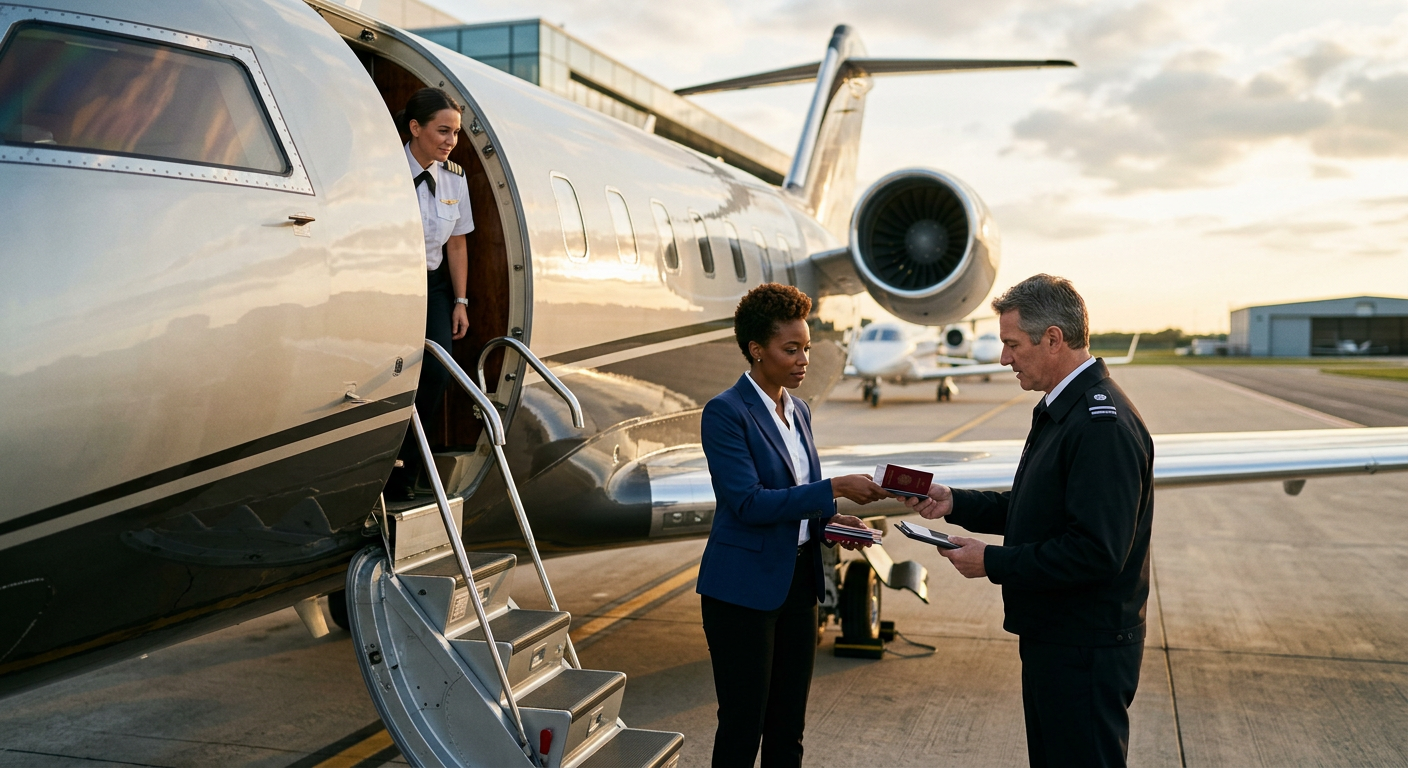
This is an international flight between Saudi Arabia and the UAE, so passengers clear exit formalities in Riyadh and entry formalities in Dubai. Each passenger needs a valid passport and any visa required for their nationality. The handling agent collects passenger details in advance so processing at the private terminal is quick. Read more in our guide to customs and immigration in Dubai and Riyadh.
Same-day returns
A popular pattern is out in the morning, back in the evening. This can be efficient because the aircraft and crew wait in Dubai rather than flying empty sectors. The key limit is crew duty time: a very long day may need extra crew or an overnight, which adds cost. If your meeting could run late, tell us in advance so we can plan for it.
What affects the cost
The main components are:
1. Aircraft category and hourly rate — set by the operator for each aircraft.
2. Flight time for each sector, and any daily minimum the operator applies.
3. Positioning — if the aircraft is not based in Riyadh, the flight to bring it there may be charged; one-way trips may include the empty return.
4. Airport and handling fees at RUH and DWC/DXB, including terminal use and parking.
5. Waiting and overnights — crew accommodation and parking if the aircraft stays.
6. Timing — demand peaks around major events such as conferences in Riyadh, and holiday periods.
We explain each of these in detail in how much a private jet charter costs in Dubai and hidden charges in jet charter. We do not publish route prices because they change with aircraft position and date; a written quote is the only reliable figure.
Tips for a smooth trip
- Share passenger passport details early so the handler can prepare.
- Confirm luggage, especially golf bags or equipment, so the aircraft hold is suitable.
- Specify dietary requirements for catering.
- Arrange ground transport at both ends in advance.
- If your plans are fluid, ask about flexibility on the return time.
The corridor in context
Many Riyadh–Dubai travellers also fly onward — to London, Istanbul or other Gulf capitals. If your trip has several legs, send them all at once: combining sectors on one aircraft can be more efficient than separate charters. Our dedicated Riyadh to Dubai route page has further planning notes, and the Saudi Arabia charter page covers wider options from the Kingdom.
All flights are operated by licensed partner operators holding the appropriate Air Operator Certificate. The quote names the operator for your flight.
Request a quote
Send your dates, times, passengers and luggage through the quote form. We will confirm suitable aircraft and return a written quote with the aircraft, operator and inclusions.
A typical day on the corridor
A common business itinerary looks like this. The handler at RUH receives passenger details the day before and confirms terminal arrival time. Passengers arrive shortly before departure, clear exit formalities at the private terminal and board. After a short flight, the aircraft arrives at DWC or DXB, where the handler meets the passengers, entry formalities are completed at the business aviation terminal and cars take the group into the city. The crew and aircraft wait, and in the evening the process runs in reverse. Planning the times in advance, and telling the crew as soon as a meeting changes, keeps the day efficient.
For leisure trips, families often fly out on a Thursday or Friday and return after the weekend. In that case the aircraft can either wait in Dubai or return to base and come back, and we compare both options in the quote so you can see which is more economical.
FAQ
How long is a private jet flight from Riyadh to Dubai?
Typically around an hour and a half airborne, depending on aircraft speed, winds and routing. The quote shows an estimated block time.
Can I fly to Dubai and back the same day?
Yes, this is common. It works best when the day stays within crew duty limits; longer days may need extra crew or an overnight.
Which airport is used in Riyadh?
Private flights generally use King Khalid International Airport (RUH) and its business aviation facilities.
Do I need a visa?
That depends on your nationality. Each passenger needs a valid passport and any visa required for the UAE (and for Saudi Arabia on the return).
Why is there no fixed price for this route?
Price depends on which aircraft is available, where it is positioned, airport fees and the date. We provide a written quote for your specific trip.